India is the world’s second-largest consumer of fertilisers and home to a plastics sector employing over 5 million people. The Strait of Hormuz blockade has cut off a large share of the feedstocks that keep both sectors running. And the government’s response, while understandable, is creating a fork in the road for India’s long-term climate commitments.
Below we set out what the shock means for India’s fertiliser and plastics sectors, and where the opportunities lie to keep energy security and decarbonisation moving in the same direction.
A deeply entrenched import dependency
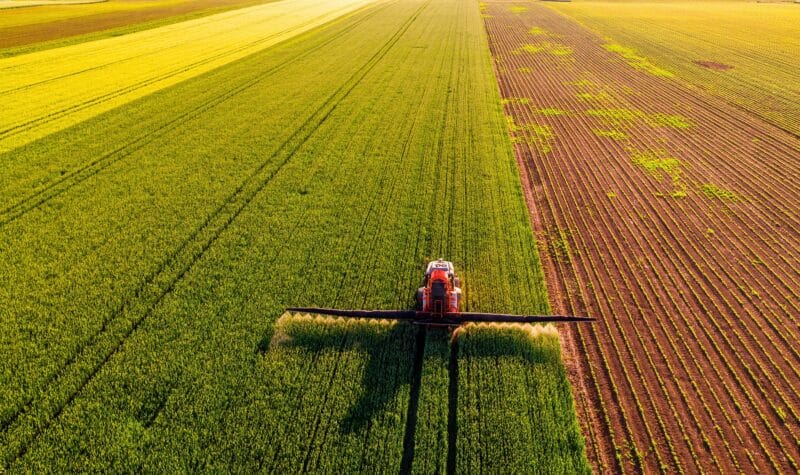
India’s vulnerability to this crisis did not emerge overnight. Its fertiliser sector has an estimated 68 to 70 per cent import dependency, spanning finished fertilisers, ammonia, and the liquefied natural gas (LNG) used to produce it. Around 85 per cent of the gas burned in India’s urea plants is now imported LNG, up from 40 per cent a decade ago. And the Gulf accounts for over half of that supply.
The disruption hit at the worst possible moment: just before the monsoon sowing season, when uninterrupted fertiliser supply is critical for India’s food security. The government moved quickly, bolstering reserve stocks to more than 51 per cent of seasonal demand and absorbing the global price spike through its fertiliser subsidy scheme. The subsidy bill is expected to rise by 46 per cent, from USD 17.89 billion to an estimated USD 26.2 billion.
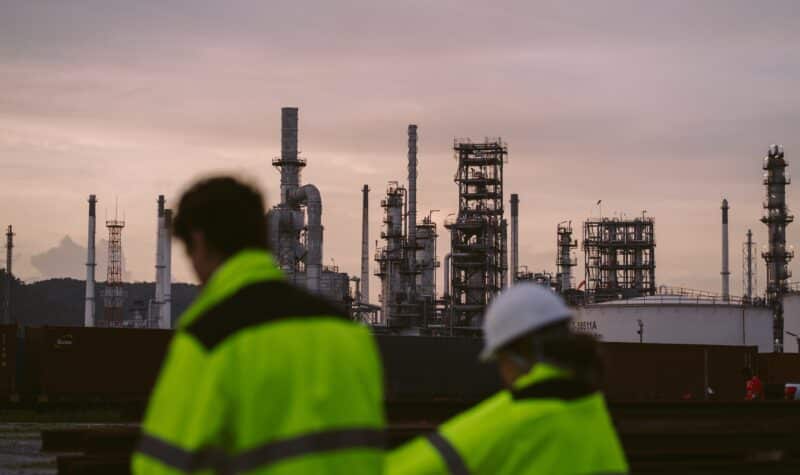
The plastics sector tells a similar story of deep import exposure, but with a different structure. The sector’s 30,000 processing units are predominantly micro, small, and medium enterprises (MSMEs), most of which operate on short-term credit and hold minimal stock reserves. When domestic petrochemical production was temporarily halted to prioritise fuel supply, these businesses felt the impact quickly. The government temporarily scrapped a 7.5 per cent customs duty on petrochemicals to offset rising costs, but this relief is time-limited, and prices are expected to reach consumers as the crisis continues.
The scale of exposure runs across the supply chain. Crude oil, naphtha, ethylene, propylene, polypropylene, polyethylene, MEG, and methanol all saw significant price increases in March 2026, with naphtha prices rising by 62 to 69 per cent and urea prices almost doubling at the cost-and-freight tender stage.
A divided response across the green ambition and commitments to coal
The Indian government has moved decisively to address the immediate crisis, but its longer-term response is more complicated.
On one hand, it has taken meaningful steps toward green alternatives. The Solar Energy Corporation of India has awarded bids for the production of 0.724 million metric tonnes of green ammonia under the National Green Hydrogen Mission, and new green methanol procurement is under way through the same framework. These are genuine and important steps, and our analysis suggests the price gap between green and grey ammonia is narrower than is often assumed.
On the other hand, the government has sharply increased its financial commitment to coal gasification, raising the outlay for the National Coal Gasification Mission from USD 1 billion to USD 3.9 billion. The objective is to replace imported LNG with domestically produced synthetic gas, reducing import dependency. But coal gasification is significantly more carbon-intensive than the fossil fuels it would replace. And with coal lock-in incentives now outweighing green hydrogen incentives by over USD 1.4 billion, there is a real risk that this crisis accelerates India’s dependence on coal assets that could take decades to displace, directly undermining its 2070 net-zero target.
This tension between short-term energy security and long-term climate commitment is the central challenge our research identifies. The question is not whether India should act, but which investments it makes now will still make sense in 2040.
The case for aligning energy security with decarbonisation
Our analysis points to several areas where India can make progress on both fronts simultaneously, and where civil society and industry have a concrete role to play.
- Scale green ammonia as an energy security strategy: Green ammonia is not only a climate solution. It is a domestically producible alternative to imported LNG-derived ammonia, which directly addresses the vulnerability this crisis has exposed. The SECI demand aggregation model has already demonstrated competitive price discovery, and our research suggests that the cost gap with grey ammonia is narrower than widely assumed and is closing. What is needed now is policy certainty, including blending mandates, longer procurement frameworks, and extended incentive periods, to give industry the confidence to invest at scale.
- Redirect coal gasification investment toward green alternatives: The USD 3.9 billion committed to the National Coal Gasification Mission represents a significant fork in the road. Our view is that these resources would deliver greater long-term energy security, and substantially lower emissions, if redirected toward the National Green Hydrogen Mission and green ammonia and green methanol programmes already underway. Energy security is a legitimate and urgent objective. But securing it through coal risks creating a new import-independent dependency on assets that will need replacing again within a generation.
- Reduce urea dependency and promote efficient alternatives: India’s heavy reliance on urea is both a climate and a soil health problem. Research consistently shows that urea is routinely over-applied, leading to nutrient loss and poor soil health with no yield benefit. Reducing urea consumption through nano-fertiliser technologies, precision agriculture, and organic alternatives serves energy security and climate goals at the same time. Civil society has an important role in supporting government programmes like PM-PRANAM and building the evidence base for mainstreaming alternatives.
- Build the upstream emissions research base for plastics: An estimated 90 per cent of plastics-related carbon emissions occur upstream, during fossil fuel extraction and production, not at end-of-life. Yet the research base for understanding and reducing upstream emissions from India’s plastics sector is extremely thin. This is a critical gap. Civil society organisations, funders, and industry need to work together to generate the evidence that can underpin viable low-carbon pathways for plastics manufacturing.
- Support circularity and enforce the single-use plastics ban: The customs duty exemption has temporarily insulated the sector from rising costs, but it has also removed one of the signals that could have driven faster adoption of alternatives and recycling. As the crisis continues, civil society should push for proactive enforcement of India’s single-use plastics ban and advocate for Extended Producer Responsibility frameworks that create genuine incentives for sustainable design and reuse.

Read the report
Our research covers India’s fertiliser and plastics supply chains in detail, including commodity-level import dependencies, price data from March 2026, and expert interviews with leading voices from industry, government, and research institutions. We also set out our full recommendations for government, industry, and civil society.
Related resources