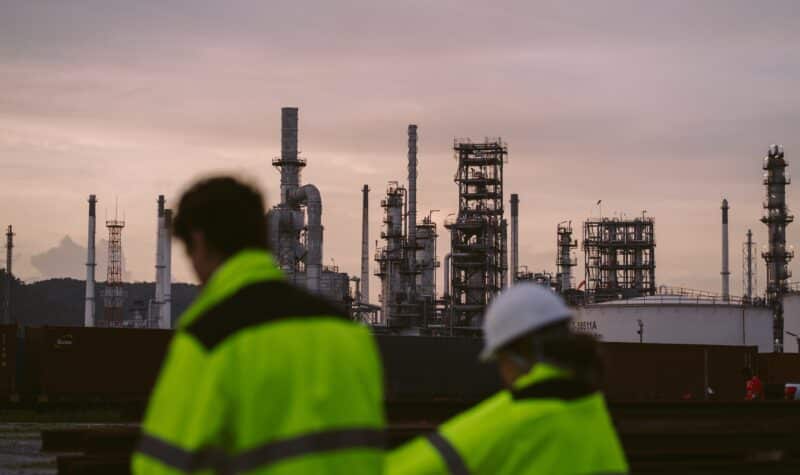
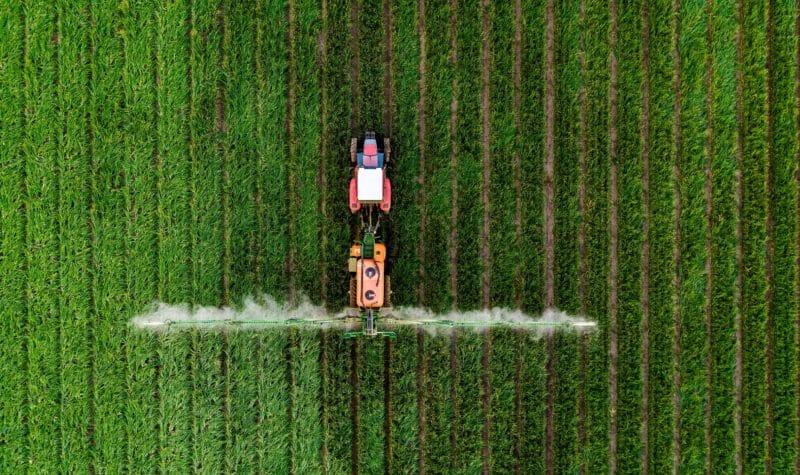
The Strait of Hormuz blockade has sent shockwaves through European fertiliser and plastics markets. But the bigger question is not how much damage has been done. It is whether Europe uses this moment to build an industry that is cleaner and harder to disrupt.
Below we set out what the shock means for the long-term decarbonisation of Europe’s petrochemicals sector, and five priorities for accelerating the transition.
A structural crisis, not just a supply shock
Europe’s petrochemicals industry was already under significant pressure before the Iran War began. Chemical plant closures had increased sixfold since the last energy crisis in 2022, and investment in new capacity had fallen to almost zero by the end of 2025.
The blockade has deepened those pre-existing problems. The Strait of Hormuz carries close to 18 million barrels per day of crude and oil products, and a fifth of global LNG supply. Its effective closure has pushed up costs for both fertiliser and plastics producers across the continent.
For fertiliser manufacturers, gas typically accounts for 60 to 80 per cent of nitrogen-fertiliser production costs. Although Europe sources under 4 per cent of its gas directly from the Gulf, these commodities are globally traded, so costs rise regardless of the source. For plastics manufacturers, the direct exposure is greater. The Gulf supplies between 30 and 40 per cent of the crude oil used in European naphtha production, alongside 40 to 50 per cent of MEG, a key input for PET plastics. European naphtha contract prices almost doubled in March.
This is the second major energy crisis to hit the sector in less than five years. And it confirms what we already knew: fossil fuel dependency is not a manageable risk. It is a structural vulnerability. The industries most exposed to that vulnerability are also the ones responsible for the largest share of Europe’s industrial emissions.
What the 2022 crisis taught us
Europe has been here before, and the lessons matter. The 2022 energy crisis should have been a turning point for the industry’s transition. It was not. Investment in clean technology within the sector fell to just €200 million in 2025, less than one per cent of what is needed annually to reach net zero by 2050.
Our analysis shows that the same pattern of short-term fixes is already emerging in response to this crisis, with member states suppressing energy prices rather than redirecting resources toward long-term resilience. The risk is that this crisis follows the same path. Our research sets out how policymakers, industry, and civil society can respond differently this time.
Decarbonisation is the resilience strategy
The Iran War has changed the terms of the debate. Reducing fossil fuel dependency is no longer only a climate argument. It is an energy security argument. Strategies that cut emissions by cutting fossil fuel use now attract what we call a “security premium,” because they simultaneously reduce exposure to the kind of price shocks and supply disruptions that have hit the industry twice in five years.
Not all emissions reduction strategies offer this. Carbon capture, for example, enables continued fossil fuel use rather than reducing it, and so offers no energy security benefit. The Iran War has actually weakened the short-term case for carbon capture, by pushing up energy and supply chain costs and increasing uncertainty for large capital projects.
The strategies that do offer a security premium, including electrification, plastic recycling, feedstock switching to biomass and green ammonia, and demand reduction, deserve prioritisation now. Our full analysis of each lever, including its readiness, abatement potential and resilience benefit, is included in the report below.
Five priorities for a resilient, fossil fuel-free industry
- Accelerate electrification: Displacing fossil fuels for process heat is more immediately achievable than replacing them as feedstock. Technologies for electrification up to 500°C are commercially available and can be introduced alongside existing systems in existing plants. In the longer term, extending electrification to higher temperatures could displace almost all fossil fuels for direct heat. The AccelerateEU strategy, the forthcoming Electrification Action Plan and the Grids Package are the critical policy levers. Policymakers must ensure these are implemented in full, closing the significant gap between EU ambition and national-level delivery that already existed before this crisis.
- Accelerate circularity: Higher virgin plastic prices have narrowed the gap between virgin and recycled materials, creating a short-term window for the recycling industry. But our analysis of the 2022 crisis shows this reversal can be brief and painful if policy does not act to close the loop. Specific opportunities include supporting local recyclate over imports, providing longer-term revenue certainty through contracts for difference, and developing chemical recycling in waste streams where mechanical recycling cannot reach. For fertilisers, the immediate priority is supporting farmers to reduce chemical fertiliser use through precision agriculture and organic alternatives, with clear accountability against the Farm to Fork target of a 20 per cent reduction by 2030.
- Avoid weakening the Emissions Trading Scheme: The 2026 ETS review is likely to face intensified pressure for further delays to the phase-out of free allowances, as happened after 2022. Our view is that this would be a mistake. It would penalise companies that have already invested in low-carbon alternatives, undermine the long-term investment signal that a 20 or 30-year capital project depends on, and create double protection for fertiliser producers already shielded from high-carbon imports by the Carbon Border Adjustment Mechanism (CBAM). CBAM should also be extended to cover the wider chemicals sector. The ETS cannot become a mechanism that is loosened each time a crisis hits.
- Carefully scale biomass feedstocks: Biomass offers meaningful feedstock diversification in the medium term, but rapid, unregulated expansion will cause sustainability problems. The EU currently lacks comprehensive biomass governance for the chemicals sector, creating risks of indirect land-use change emissions, fraudulent sustainability claims and competition with other sectors for scarce feedstock. The immediate policy priority is establishing robust sustainability standards and an appropriate hierarchy of use, before scaling lead markets for bio-based chemicals. Our research explores what that governance framework needs to cover, and where the near-term opportunities lie.
- Develop strategic partnerships for green ammonia: The fertiliser crisis has focused government attention on strategic autonomy in food production. This creates an opening for the EU to develop green ammonia partnerships with lower-cost producer countries, including near-abroad countries such as Morocco, Tunisia and Egypt. The H2Global auction to supply Egyptian green ammonia to Europe provides an important early proof of concept. Scaling this approach through contracts for difference auctions with dedicated partner country allocations, and complementary European Investment Bank and European Bank for Reconstruction and Development lending, could build secure fertiliser supply for Europe while supporting industrial development in partner countries.
Read the report
Our full research covers the cost and competitive impacts of the blockade on European producers, a detailed comparison with the 2022 energy crisis, and an in-depth assessment of each decarbonisation lever, including its readiness, abatement potential and resilience benefit. We also set out specific recommendations for policymakers, industry and civil society.
Related resources